Surface Plasmon Resonance

Surface Plasmon Resonance (SPR) is the reminiscent oscillation of electrons conductions stimulated by incident light at the interface between negative and positive material. Through SPR the binding of the molecules can be measured in real-time without the use of any labels.

Surface Plasmon Resonance is used to observe the change in refractive index at any surface. SPR occurs when the total internal reflection of polarized light takes place at a metal film. SPR instruments are generally used to measure affinity and the binding kinetics of the molecular interactions. SPR can be used to measure the binding between a protein and an antibody or in between two proteins or in between DNA and a protein and many more.

The technique of SPR is Unique:

The technique of SPR is unique because it is among one of the few techniques which allow the determination of binding kinetics, not just binding affinity which is commonly observed in traditional techniques like ELISA. The determination of binding kinetics is only through a biosensing technique that provides the real-time data of both the association and dissociation phases of the interaction. This data provides insights of both the binding stability and stability of the interaction in detail. Such insights are very critical for many industries and research areas as they help researchers to determine the molecules which are interacting also why are they interacting and how strongly do they interact.

Advantages of SPR:

There are several advantages to SPR. Some of them include:

  • SPR is Label-free that means it is less expensive and easier to perform as compared to other common assay techniques.
  • SPR is easily available in small sample volumes.
  • SPR is highly sensitive which means it can be used for small molecules to large proteins.
  • SPR provides for Real-Time readings hence giving a deeper insight into the binding kinetics as compared to other affinity techniques.
  • SPR is quantitative.

Applications of SPR:

The SPR data is critical in many industries and has been in use for over 25 years by companies like GSK, Roche and Pfizer and by many universities throughout the world. Some examples of applications include:

  • Developing and screening new biotherapeutics and new pharmaceuticals
  • Quality control in the monitoring of the bioprocess
  • Development of new diagnostic assays
  • In basic research like characterizing and discovering protein function, disease mechanisms etc.

To know more about it, Click Here.

Get a quote

[wpforms id=”15215″]

Biosensor Principle

Introduction

A biosensor is a diagnostic device used for the detection of a physical or chemical substance that combines a biological component with a physio-chemical detector. The reader of the biosensor device connects with the signal processors or associated electronics, which are primarily responsible for the display of results in a user-friendly manner. Now it is possible to generate a user-friendly display that includes a transducer and sensitive elements.

There are primarily two types of biosensors, some are portable and others are either the fixed type or bench-type. Some examples are electrochemical, catalytic Bead, photoionization, infrared, infrared Image, ultrasonic, holographic detectors/sensors and more recently surface plasmon resonance (SPR) and magneto-optic (MO) surface plasmon resonance (MOSPR)-based sensors.

The major requirement of any biosensors depends on the approach in terms of commercial applications and research in the identification of the target molecule, as well as the availability of an appropriate biological recognition element.

The most common and best example of a commercial biosensor is the blood glucose biosensor. This sensor utilizes the glucose-oxidase enzyme that breaks down the glucose. In this process of breakdown, it first oxidizes glucose and uses two electrons to reduce the flavin adenine dinucleotide (FAD) — an enzyme component to FADH2 which is then oxidized by the electrode in several steps. The resulting current is a measure of the concentration of glucose. In this scenario, the electrode is the transducer, and the enzymes are the biologically active components.

Applications of Biosensors

Most optical biosensors are based on the principle of surface plasmon resonance (SPR). The SPR occurs when a thin layer of gold on a high refractive index glass surface absorbs the laser light and produces electron waves (known as surface plasmons) on the gold surface. This condition arises at a specific angle and wavelength of the incident light. The phenomena depend on the binding of a target analyte to a receptor that produces a measurable signal.

One way the SPR sensors operate is by using a sensor chip. The chip consists of a plastic cassette supporting a glass plate, coated with a microscopic layer of gold on one of the sides. where the optical detection apparatus of the instrument lies. The opposite side of the plate is then attached to the microfluid flow system that allows the passage of reagents in the solution.

The glass sensor chip of this side can be modified in a number of ways, which allows easy attachment of molecules of interest. Hence, the refractive index at the flow side of the chip surface has a direct influence on the behaviour of the light reflected off the sensor side. The flow side of the chip has an effect bonded on the refractive index of the material of interest and in this way, biological interactions are measured to a high degree of sensitivity. As a result, the refractive index of the medium changes near the surface when the biomolecules are attached to the surface and the angle of SPR varies as the function of this change.

Biological biosensors are designed from a genetically modified form of a native protein or enzyme. The protein is configured for the detection of a specific analyte and the ensuing signal is read with the help of detection instruments such as fluorometers or luminometers, to name a few. To read more about “Biosensors” Click Here.

Biosensor Technology-a Game Changer

Biosensors are new, highly innovative devices used for detecting biological responses, which are converted into measurable data.

How Biosensors Work:

Biosensors capture biological data, which is first analyzed using algorithms and then translated into measurable quantity.

Advantages of Biosensors:

  • Detects & Prevents Progression of Illness
    Research has shown that biosensors highly effective in diagnosing the early onset of diseases caused by various infections. This technology has the ability to be used daily, as the sensors can be incorporated to mobile devices, which can synchronize personalized data to applications, which aids in remotely monitoring health. This data can be immediately available to physicians, which allows treatment to be more convenient and efficient. Early detection of these diseases can allow treatment to begin promptly, which increases the likely-hood of recovery.
  • Detects Blood-Alcohol Levels in the Body
    A recently designed wearable device called “Biosensor Tattoo” can sense the changes in the electric currents flowing through the sweat of the user. These changes in the electric currents determine blood-alcohol levels in the body. This information is then sent to the user’s mobile phone to alert them. This will allow users to make informed decisions as to whether it is safe to drive.
  • Detects Blood-Glucose Levels in the Body
    The advancement in biosensor technology allows diabetics to monitor their glucose levels in a more affordable, convenient way. This non-invasive device eliminates the use of multiple test strips.
  • Biosensor Technology can have a Huge Impact 
    Biosensor technology currently has a huge impact on the healthcare industry, but with time and innovation these sensors can revolutionize the way diseases are diagnosed. Biosensors play an important role when it comes to monitoring health.

Future of Plasmonic Biosensors

Introduction

Biosensors represent the technological side of the living senses that have found a routine application in amperometry enzyme electrodes for the decentralization of blood glucose measurement, for the interaction analysis by surface plasmon resonance in drug development, and to some extent, DNA chips for enzyme polymorphisms and expression analysis. These technologies have already reached a highly advanced level and need only minor improvement now.

Fundamentals

In the field of optics, the phenomenon of surface plasmon resonance (SPR), is widely used as optical biosensors. This was established from studies that involved the excitation of the surface plasmons on the metallic surfaces, especially noble metals. In this process, the metallic surfaces are exposed to light, a photon is trapped near them and that prompts electrons to move as a single entity. The oscillation of electrons on the metal film results in the formation of an electromagnetic field that decays out on the surface and is also known as the evanescent field.

Potential Applications

Point of Care

  • One of the primary applications of the biosensors is the development of the point- of-care testing system for prompt and precise therapy. This can be achieved by the integration of technologies such as disposable chips, portable platforms, miniaturization of the analytical machines and so on.
  • A smartphone-integrated analytical system can be used, which enables rapid diagnoses by allowing the data collected on the smartphone to be connected to medical doctors and institutions via Wi-Fi. In addition to this, disposable chips have also been developed as convenient devices with a simple operation such as color-change detection. Thus, the SPR sensors (e.g. immunosensor, etc.) have a great potential to utilize measurement of bio-markers due to their label-free, cost-effective analysis, and with the rapid response time. Because of these advantages, SPR-based sensors can facilitate high throughput and multiplex measurement of biomarkers when integrated with the microfluidic system.

SPR and Sensitivity

One of the challenges of the existing surface plasmon resonance (SPR) based sensors is that the sensitivity (if you would like to learn more about the biosensor sensitivity, click here) is not high enough for the measurement of biomarkers in small volumes of body fluids. Also, it is not a natural color change-based method, except for that of Au nano-particles.

Several efforts have been made to improve the sensitivity of the biosensors. These include metal surfaces, magnetic activity, grating or photonic crystals, etc. Meanwhile, the plasmonic effect which stimulates the SPR phenomena, can also stimulate another phenomenon that can also be applied to the development of immuno-sensors, including surface-enhanced Raman scattering (SERS), fluorescence resonance energy transfer (FERT), and metal-enhanced fluorescence) (MEF). If the SERS, FRET, MEF based analytical methods could be assimilated with an SPR-based sensor that employs plasmonic effects, targets can be measured in a better way and the drawbacks of each analytical method can be supplemented.

MOSPR and Sensitivity

  • Several plasmonic-based analytical methods have advantages with nano-structures and noble metals, and there is a possibility to develop a magneto-optic SPR sensor with high performance using an integrated platform.
  • Significant potential exists to develop MOSPR-based sensors with noble metals and nanostructures, for improvement in functionality as effective biosensors. The best advantage of this analytical method is in-situ, label-free detection. This could result in the development of several new types of sensors that can measure targets in a simple, rapid and cost-effective manner.


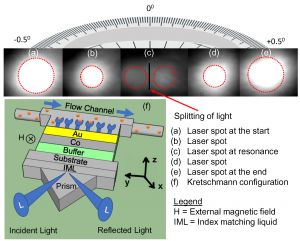
Figure: A microfluidic channel incorporated biosensor, and optical excitation scheme.

Currently, there are signific shortcomings in SPR-based immuno-sensor systems which is a challenge for effective detection. However, now the integration of magneto-plasmonic-based sensing systems can offer a breakthrough for the development of effective MOSPR sensors, for early diagnosis and point of care testing of various diseases, which in turn can significantly improve pharmaceutical, biomedical and clinical applications.

For more information, Click Here.

Get a quote

[wpforms id=”15215″]

Gas Sensors in the Industry Setting

Background

Gas sensors are devices used to detect the presence of gases in an area. Such sensors can be used to detect a gas leak or other emissions and can help shut down the process automatically by interfering with a control system. This is done in many different ways, one way is by sounding an alarm, which warns the operator in the area and indicates the location of the gas leak. What makes gas sensors so significant, is that they can detect gases that are harmful to organic life, animals, and humans.

Gas sensors are used mostly to detect flammable, combustible and toxic gases, as well as oxygen depletion. These sensors can be found in locations such as oil rigs, to monitor the processes of manufacturing, and are used emerging technologies such as photovoltaics.

Gas leak detection is the process in which potentially hazardous gas leaks are identified by sensors, and an alarm is sent off to inform people of the danger.  Another way of detection is the visual identity that can be carried out by using a thermal camera.

Gas detectors are classified as per their mechanism of operation such as oxidation, semiconductors, photoionization, catalytic, infrared, etc. They are classified into many categories:

  • Portable gas detectors are used to monitor the atmosphere around us, they are usually worn on clothing, a belt or harness. Such detectors are mostly battery-driven and they transmit warnings through audible and visible signals, such as flashing lights and alarms.
  • Fixed types of gas detectors are used to detect one or more types of gases. Such detectors are mounted near the process area of a plant, in control rooms, or an area of interest, such as a bedroom of a residence. Normally, industrial sensors are installed on a mild steel structure that is rigid where continuous monitoring can be carried out.

Types of Gas Sensors

Electrochemical gas sensor: Electrochemical gas sensors allow the gases to diffuse through a porous membrane to an electrode where it is either reduced or chemically oxidized. The determination of the amount of current produced is measured by the amount of gas that is oxidized at the electrode which indicates the concentration of the gas. Some customization in electrochemical gas detectors has been done by manufacturers, by changing the porous barrier to allow the detection of the concentration range for a certain gas. Moreover, since the diffusion barrier is a mechanical/ physical barrier, the detector tends to be more reliable and stable over the durability of the sensor and hence require less maintenance than any other early detector technology.

Catalytic Bead Sensor: These sensors are commonly used to measure combustible gases that present an explosion hazard when concentration levels are in between the upper explosion limit (UEL) and the lower explosion level (EL). The reference and active beads containing platinum wire coils are located on opposite arms of a Wheatstone bridge circuit and heated electrically, up to a few hundred-degrees Celsius. A catalyst present in the active bead allows combustible compounds to oxidize, thereby enhancing the heating of the bead even further and changing its electrical resistance. The result of the voltage difference between the passive and active beads is proportional to the concentration of all combustible gases and vapours present. The sampled gas can enter the sensor through a sintered metal frit, that provides a barrier to prevent an explosion when the instrument is carried into an atmosphere containing combustible gas. Pellistors measure all combustible gases, but they are more sensitive to smaller molecules that diffuse through the sinter more rapidly. The measurable concentration ranges are from a few hundred ppm to a few volume percents. Such sensors are robust and inexpensive, but require some minimum percentage of oxygen in the atmosphere to get tested and they can be poisoned or inhibited by compounds such as mineral acids, silicones, chlorinated organic compounds, and sulphur compounds.

Photoionization Sensors: These detectors use a high-photon-energy UV lamp to ionize chemicals in the sample gas. If the ionization energy of the compound is below that of the lamp photons, an electron will be ejected, and the resulting current is proportional to the concentration of the compound. The broad range of compounds can be detected at levels that range from a few ppb to several thousand ppm. Some detectable compound classes in order of decreasing sensitivity include olefins, alkyl iodides and aromatics, amines, sulphur compounds, ketones, alkyl bromides, organic esters, aldehydes and alkanes, and organic acids. Photoionization detectors are beneficial because of their simplicity and excellent sensitivity. The major limitation with these detectors is that their measurements are not compound-specific. Photoionization detectors are widely used for industrial hygiene and environmental monitoring. They are usually bench-type, miniature, hand-held clothing clipped PIDs.

Infrared Point Sensors: These sensors use radiation which passes through the volume of gas. In these sensors, energy from the sensor beam is absorbed in certain wavelengths, depending on the properties of a specific gas. For example, carbon monoxide absorbs wavelengths of about 4.4-4.5 micrometers. The energy of this wavelength is compared to a wavelength outside of the absorption range. The difference in energy between these two wavelengths is proportional to the concentration of gas present. The advantages of these sensors that they do not have to be placed into the gas to detect it and can be used for remote sensing. The infra-red sensors are used for detecting hydrocarbons and other infrared active gases such as carbon dioxide and water vapour. These sensors are commonly found in refineries, waste-water treatments, chemical plants, gas turbines, chemical plants, and other facilities where flammable gases are present and there is a possibility of explosion. The remote sensing can monitor large volumes of space. Infrared sensors are also being researched in the area of Engine Emissions. The sensor detects high levels of carbon monoxide and other abnormal gases present in vehicle exhaust.

Infrared Image Sensors: These sensors include both active and passive systems. For active sensing, infrared imaging sensors usually scan a laser view of an entire scene and track for the backscattered light at the absorption line of the wavelength of a specific target gas. Passive imaging sensors, on the other hand, measure spectral changes in every pixel of an image and explore individual spectral signatures that indicate the presence of target gases. The compound types that can be imaged are similar to the ones that can be detected with infrared point detectors, but the images can help identify the source of gas.

Semiconductor Sensors: These sensors are known as metal-oxide-semiconductor sensors. They detect gases by a chemical reaction that takes place when the gas comes in direct contact with the sensor. The common material used in semiconductor sensors is tin oxide. The electrical resistance in the sensor reduces when it encounters the monitored gas. The change in the resistance is used to calculate the gas concentration. Semiconductor sensors are usually used to detect oxygen, hydrogen, alcohol vapour, and poisonous gases such as carbon monoxide. Semiconductor sensors are commonly used in carbon monoxide sensors and breathalyzers. Semiconductor sensors must encounter the gas to detect it and they work for a smaller distance as compared to ultrasonic and infrared point detectors. Semiconductor sensors can detect various gases such as sulphur dioxide, hydrogen sulphide, carbon monoxide, and ammonia. These sensors have been widely used since the 1990s.

Ultrasonic Non-gas Detectors: These are not gas detectors; they detect the aural emission created when a pressurized gas expands in a low-pressure area through a small outlet (point of leakage). These devices use aural sensors to detect the changes in the background noise of their environment. As high-pressure gas leaks generate sound in the ultrasonic range of 25 kHz to 10 MHz, the sensors can easily differentiate the frequencies from the background aural noise (which is 20 Hz – 20 kHz). The ultrasonic gas leak detectors cannot measure the concentration of gas, but they can determine the leak rate of gas escaping. This is because the ultrasonic sound level depends on both the pressure and size of the gas leak.

Ultrasonic gas detectors are mostly used for remote sensing in the outdoors where weather conditions can easily disintegrate evading gas even before it reaches the leak detectors that require interaction with the gas to detect it and sound an alarm. Ultrasonic detectors are commonly found on offshore and onshore oil/gas platforms, gas turbine power plants, gas compressors, metering stations, and other facilities that have outdoor pipelines.

Holographic Gas Sensors: These sensors use light reflection to detect changes in a polymer film matrix that contain a hologram. As holograms tend to reflect light at certain wavelengths, any change in their composition can generate a colorful reflection that indicates the presence of a gas molecule. Holographic sensors require sources of light such as a CCD detector or an observer, or white light or lasers.

Get a quote

[wpforms id=”15215″]

HISTORY OF MAGNETISM (CONTD.)

मैले माइसंसार को जनवरी ८, २०१६ को रिपोर्टमा म्याग्नेटिक पदार्थको बायोम्याग्नेटिक छेत्रमा उपयोगिताबारे जानकारी दिएकोथिए । त्यसको लगत्तै मैले जनवरी २१, २०१६ मा प्रकाशित रिपोर्टमा म्याग्नेटिक पदार्थको इतिहास बारे संछेपमा जानकारी दिने प्रयास गरेको थिए । हामीलाई थाहा छ कि कुनै पनि मूल कुरा बुझ्नको लागि त्यस बस्तुको जरा सम्म नपुगी हुदैन । त्यसै गरि म्याग्नेटिक पदार्थहरुको उपयोगिता बुझ्नको लागि तेस्को जरा सम्म नपुगी हुदैन भन्ने ठानी जनवरी २१ को रिपोर्टमा म्याग्नेटिक पदार्थको इतिहास सम्बन्धि संछिप्तमा प्रस्तुत गरेको थिए । आजको रिपोर्टमा पनि म्याग्नेटिक पदार्थको इतिहासलाईनै निरन्तरता दिने जमर्को गेरको छु । जसरि गाडी चालकले छिटो – छिटो गाडी हाकेमा गन्त्यब्य पुग्न पनि सकिन्छ वा नपुग्न पनि सकिन्छ, अर्थात् बिच्मै दुर्घटनमा पनि पर्न सकिन्छ, तर , ढिलो गरेर नियेमले दिए बमोजिम, ट्राफिक नियेम पालना गरि, बिस्तारै हतार नगरी गाडी चलाएमा, गन्तब्य स्थानमा अबस्य पनि पुगिन्छ भन्ने हाम्रो नेपाली मिठो उखान टुक्का जस्तै, मैले बिसतारै भएपनि, तपाईहरुलाई म्याग्नेटिक पदार्थको इतिहास बाट सुरु गरि, इनिहरुको उपयोगिता मेडिकल छेत्रमा कसरि भैरहेको छ र भविष्यमा पनि यसको महत्तो कसरि बढ्दै जाने छ भन्ने बारेमा माइसंसार को बिज्ञान ब्लग मार्फत सरल नेपाली भाषामा, सबैले भुझ्न सक्ने गरि मा प्रस्तुत गर्दै जानेछु ।

म्याग्नेटिक पदार्थ सुन्दा जति सरल लाग्छ, एस्लाई बुझ्न र पहिचान गर्न तेती नै कठिनछ, तर असम्भव चाही छैन है! जनवरी २१ को रिपोर्टमा, हामीले, गिल्बर्ट, बर्नोउलि, (फ्रंक्लिन, ओरेस्टेड, एमपेर,), र बिशेष गरि माइकल फ्याराड़ेले १९२१ इ.वि. मा गरेको इलेक्ट्रिक चार्ज र चुम्बकको आपशी सम्बन्ध छ भनि प्रमाणित गरेको र पछि १९४५ मा फेरि चुम्बक र प्रकाशको किरणको बिचमा आपसी संम्बन्ध छ भनि प्रयोगगरि देखाइ दिए । तेतिबेला नाम चलेका भौतिक शास्त्री र गणित् शास्त्री जेम्स क्लार्क म्याक्सवेल लाइ प्रोत्सान त मिल्यो नै तर चिन्ता पनि उत्तिकै लागेर आयो । जाबो पुस्तक पसलेले (उनको दृस्टीमा) एस्तो चमत्कार गर्ने? भनेर उनि तात्तीय पनि । माइकल फ्याराड़ेको एकपछि अर्को नया अविस्कारबाट प्रेरितभै, म्याक्सवेलले चार वटा प्रसिद्द गणितिए शुत्र, जुन उनको आफ्नै नाम बाट चिनिन्छन, ल्याए जसले माइकल फ्याराड़े ले गरेको प्रयोगको रिजल्टलाइ थेउरिटकल रुपमा ब्याख्या गर्न सकोस । अचम्म को कुरा के छ भने, यी चार शुत्रहरु हेर्दा ज्यादै सरल प्रकृतिका छन् तर बुझ्न, सस्कृतको श्लोक झैँ गारो छ, र ब्याख्या गर्न पनि गारो नै छ, तर असम्भव चाइ छैन है! धेरै बैगानिक साथी हरु संग कुरा गर्दा पनि म्याक्सवेल का शुत्रलाइ सरल भाषामा ब्याख्या गर्न धौ धौ परेको मैले देखे । तेसैले मैले यहा, सरल भाषामा बुझ्ने गरि ब्याख्या गर्न प्रयास गर्ने छु. र तिनी हरु एस् प्रकार छन्:

DIV.E = r (i) DIV.. B = 0 (ii) Curl × E = -dB/dt (iii) (1/µ0) Curl × B = j + x dE/dt (iv) (1)

यहा, शुत्र एक (i) ले गस (Gauss) को बिधुत नियेमलाइ प्रतिनिधित्य गर्छ. जसको अर्थ हो कुनै पनि भोलुम (Volume) बाट निस्कने बिधुत तेस भोलुम (Volume) भित्र रहेको चार्ज संग सिधै सम्बन्ध राख्छ । दोस्रो शुत्रले गसको (Gauss’s) म्याग्नेटिक नियेम्लाई प्रतिनिधित्य गर्छ, जसको अर्थ हो इलेक्ट्रिकको पोजीटीभ र नेगेटिभ चार्ज भए जस्तै म्याग्नेट को एकल पोल उत्तर वा एकल पोल दक्षीण कहिलेइ पनि एक्लै हुदैन । अर्थात, बन्द छेत्रमा पस्ने वा घुस्न खोज्ने म्याग्नेटिक फ्ल्क्स शुन्य हुन्छ । शुत्र तिन, जुन फ्याराड़े – म्याक्सवेलको शुत्रको रुपमा चिनिन्छ, कुनै पनि बन्द छेत्र भित्र जम्मा हुने भोल्टेज, म्याग्नेटिक फ्लाक्स परिबर्तनको दर संग सिधा सम्बन्ध राख्छ । (यो शुत्र लाइ फ्याराड़ेको ल ओफ इन्डक्सन को रुपमा पनि चिनिन्छ ) र शुत्र चार अम्पेरे को सर्कुटल ल को रुपमा चिनिन्छ, जसको अर्थ हो, कुनै पाएँ बन्द घेरा भित्र, इलेक्ट्रिक करेन्ट र इलेक्ट्रिक फिल्ड को समय सगैं हुने परिबर्तन सिधै ओरिपरि रहेको म्याग्नेटिक फिल्ड भित्र छिर्ने छेत्र संग सम्बन्धित् हुन्छ ।

तपाइहरुलाइ, सरल भाषामा ब्याख्या गर्द गर्दे पनि यी चारवटा शुत्रको अर्थ बुझ्न अझै पनि गारो भएको हुन सक्छ । तेसैले मैले छोटकरीमा एसको शार व्यक्त गर्न चाहन्छु । संछिप्तामा भन्ने हो भने, जसरि, इलेक्ट्रिक फिल्ड को शुत्रहरुले कुनै पनि एक पोइन्टको ओरिपरि आवस्थित इलेक्ट्रिक चार्ज र इलेक्ट्रिक फिल्ड संगको सम्बन्ध राख्छन, तेसै गरि म्याग्नेटिक फिल्ड को शुत्रहरुले कुनै एउटा पोइन्ट को ओरिपरि म्याग्नेटिक फिल्ड र त्यो पोइन्टको ओरिपरि अवस्थित करेन्ट डेनसीटी संग सम्बन्ध राख्छन । म्याक्सवेल को यी चारओटा शुत्र हरुको सभैभन्दा महत्यपूर्ण कुरा के हो भने यी शुत्रहरुले कुनै पनि इकेट्रोम्याग्नेटिक विकिरण, जस्तै शुर्य को किरण, जसमा दुवै इलेक्ट्रिक र म्याग्नेटिक किरण संग-सगै प्रकास को गतिमा यात्रा गरेका हुन्छन, र प्रकासको गति, भ्याकुममा, येस्को वेवलेन्थ (Wavelength) र फ़्रिक़ुएन्सि (Frequencey) को गुणात्मक मान हुन आउछ । येहा बुझ्नु पर्ने कुरा के छ भने यो शुत्र, प्रकासको लागि मात्र नभएर ब्रह्माण्डमा रहेका सबै खाले इलेक्ट्रो म्याग्नेटिक तरङ्ग हरुमा लागु हुन्छ।
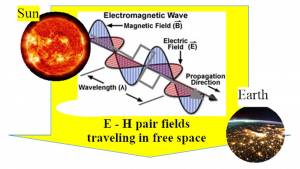
Fig. 1: इलेक्ट्रिक र म्याग्नेटिक जोडा., यात्रा गरि रहेका छन् (गति @ 3 × 10⁸ मीटर/सेकेंड्स ). E र H ९० डिग्री फरक छन् ।

माथि म्याक्सवेलका चार शुत्र हरुमा देख्नु भएको, म्यनेटिक र इलेक्ट्रिक कन्सटेन्ट, जुस्त क्रमश:, पर्मिअबिलिटि र पर्मिटीविटी भनिन्छ, तिनी हरुलाई गुणा गरेर स्कुयर रुट गरि, इन्भ्र्स गर्दा, भ्याकुम मा सुर्य को किरण को गति ठ्याक्कै, ३ करोड प्रति मिटर हुन आउछ, i.e., c = । अचम को कुरा त के छ भने, सुर्यको गति म्याक्सवेल को शुत्रमा उल्लेखित एभरेज इलेक्ट्रिक फिल्ड (Eavg) र म्याग्नेटिक (BAvg) फिल्डको अनुपात संग ठ्याक्कै मिल्न आउछ (अर्थात् ३ करोड मीटर प्रति सेकेण्ड)।

इलेकट्रीसिटी र म्याग्नेटिक पदार्थको अधार इलेक्ट्रिकचार्जहरु र म्याग्नेटिक डाइपोल (म्याग्नेटिक डाइपोलहरु र इलेक्ट्रिक करेन्ट को लुप हरु भन्नु एकै हो ) हो भन्ने कुरामा अब कुनै शंका छैन । म्याग्नेटिक छेत्रमा, म्यक्सवेलको शुत्र को साथ साथै लारेंज़को शुत्र अर्को महोत्त पूर्ण अबिषाकर हो । लोरेंज़ को शुत्रले कुनै पनि एउटा गतिशील पार्टीकल जसको चार्ज, q र गति, v छ, तेस्ले अनुभव गर्ने इलेक्ट्रिक र म्याग्नेटिक बल, तल को शुत्र (२) ले दिन्छ ।

f=q(E+ v×B) (2)

इलेकट्रीसिटी र म्याग्नेटिक पदार्थ को आधार इलेक्ट्रिक चार्जहरु र म्याग्नेटिक डाइपोल (म्याग्नेटिक डाइपोलहरु र इलेक्ट्रिक करेन्ट को लुप हरु भन्नु एकै हो ) हो भन्ने कुरामा अब कुनै शंका छैन । म्याग्नेटिक छेत्रमा, म्याक्सवेलको शुत्र को साथ साथै लारेंज़ को शुत्र अर्को महोत्त पूर्ण अभिस्कार हो । लोरेंज़ को शुत्रले कुनै पनि एउटा गतिशील पार्टीकल जसको चार्ज, q र गति, v छ, तेस्ले अनुभव गर्ने इलेक्ट्रिक र म्याग्नेटिक बल, तल को शुत्र (२) ले दिन्छ ।

अहिले आएर म्याग्नेटिक पदार्थ को व्यापक प्रयोग हुदै आएको छ, विषेस गरेर, टेलीकम, कम्प्युटर, र अन्य कन्जुमेर समान हरु. व्यापक रुपमा प्रयोग हुदै आएका इलेट्रोम्याग्नेट हरु पुन: साना साना पर्मानेन्ट म्याग्नेट हरु बाट रुपान्तरित हुदैछन । मैले जनवरी ८ मा प्रकाशित रिपोर्टमा उल्लेख गरे झैँ यी म्याग्नेट हरुको सर्बाधिक प्रयोग कम्प्युटर छेत्र मा भएको छ र जसको फलशोरूप अहिले इन्टरनेटको रेभोलुसन भएको छ। कम्प्युटर बाहेक अरु छेत्रहरु, जस्तै, अर्थ साइन्स, स्पेस टेक्नोलोजी, फुड साइन्स, इन्भैरोमेंट मोनीटरिङ्ग, इत्यादी. र, मग्नेटिक पदार्थको प्रयोग मेडिकल छेत्र मा अत्येन्त बढेर गएको छ। मैले आउदो दिनमा म्याग्नेटिक पदार्थको उपयोग मेडिकल डायेगनोस्टिकस, DNA सीक्योंसिंग (Sequencing), पोइन्ट ओफ केयेर जाच (point of care testing), क्यान्सर पत्ता लगाउने, रोकथाम र उपचार सम्बन्धि सामग्री हरु प्रस्तुत गर्ने छु । माइ संसार हेर्दै गर्नु होला । अंग्रेजी रुपान्तर पढ्न चाहने हरुले तलको लिंक क्लिक गर्नु होला.

 

REPORT II MAGNETS- HISTORICAL PROPECTIVES

January 21, 2016 (Revised and re-posted on April 23, 2020)

In my first report published earlier (Jan 8, 2016) in the mysansar blog, I reported that the history of the magnetic materials and the field of magnetism date back to ancient times – well before the stone and pre-stone ages, and tried to provide a relationship between magnetism and-bio medicine. In this report, I will elaborate on how these magnetic materials were perceived in the old ages and what led them to become the most important materials in the modern era.

Interestingly, the magnetic history and the history of science began at the same time. The curiosity in magnetic materials is prompted by the ability of the invisible and remote-control nature of magnets to attract or dispel materials from a distance. To understand more about the invisible magnetic energy or force, we need to have either two pieces of permanent magnets, or one permanent magnet and other pieces of magnetic materials such as Fe, Co, Ni, etc., or even Loadstones – weak magnetic materials.

Loadstones are widely popular and abundantly available rocks in the earth and are rich in magnetite -also known as Fe3O4. These rocks are fascinating because they are still very good magnets, though they were magnetized by huge lightning strikes thousands of years ago.

While it would not be wrong to say that the application of magnets dates back to stone and pre-stone ages, to our knowledge, the initial application of magnet in the form of “Spoon, also named as a south pointer” by humans’ dates back to mid-11th century (1064 AD) in China. A century later, a European re-invented the magnet in the form of a compass. The discovery of the compass eventually helped Mr. Christopher Columbus discover America in the late 15th century (1492 AD). Between the periods of the 5th and 15th century, also known as the medieval age, many compared the magnet to the human soul because of its interesting movement and also believed that the alignment of the compass along the north and south direction was due to the effect of the positioning of stars around the earth. After the medieval age, however, it was Gilbert who investigated the phenomenon of magnetism systematically using the scientific method in the early 17th century (1600 AD).

The investigation on magnetism and magnetic material continued and an important development in magnetism was made by Swiss Mathematician Daniel Bernoulli in late 18th century (1743 AD) who invented Horse Shoe magnet, that is still widely used in school text books around the globe.

By the 18th century, people already knew that magnets have two poles, one is north and the other south. By now, they also knew that electrons in metals have two charges, negative and positive.

A true relationship between magnets (magnetism) and electrons (electricity), was accidentally discovered in the early 19th century (1820 AD) by Hans Christian Oersted from Denmark. Immediately after that, Andrew-Marie Ampere and Dominic Francois Arago from Paris demonstrated that a current-carrying coil was equivalently a magnet.

It was Michael Faraday who discovered electromagnetic induction in the early 19th century (1821 AD). He used a “still” magnet, a current-carrying coil, and discs of mercury to demonstrate the principle of an electric motor. Michael Faraday also discovered the interrelationship between magnetics and optics in the late 19th century (1845 AD). In the next report, you will learn more about magnetic materials and magnetism, and their potential applications in the health care industry.


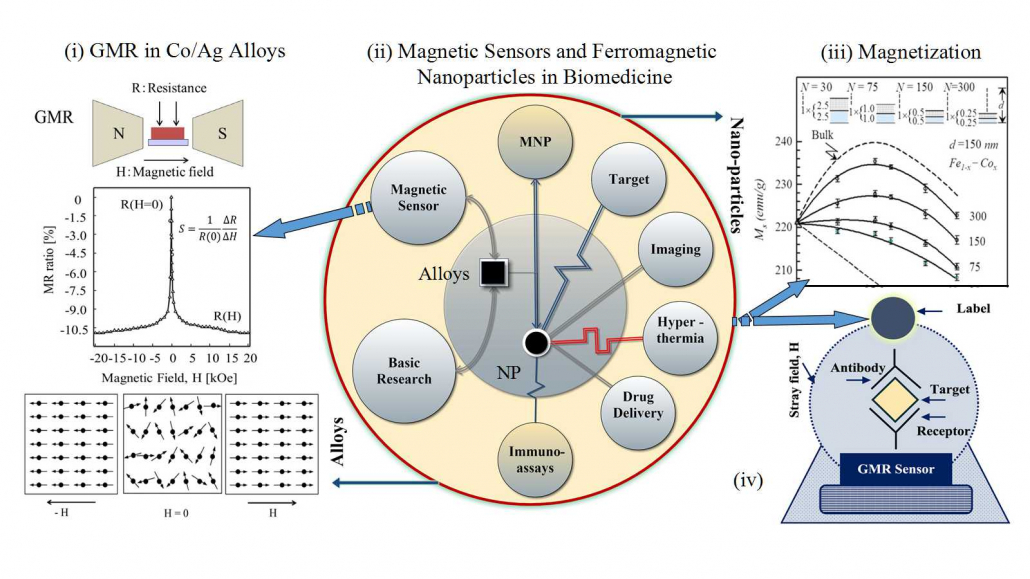
To download the relevant text, click Ferromagnetic Alloys: Magnetoresistance, Microstructure, Magnetism, and Beyond (Review)

REPORT I – APPLICATION OF MAGNETIC MATERIALS

चुम्बकीय पदार्थ हरु को उपयोगिता सम्बन्धि को इतिहास धेरै लामो छ र वेद-वेदान्त को अबधि सम्म फैलिएको छ। तर अहिले आएर चुम्बकीय पदार्थ हरु को उपयोगिता र महत्तो ह्यात्तई बढेर गएको छ, बिशेस गरेर नया उपकरण हरुको बिकाशले यसको उपोगीयोता बढ्दै गएको हो । मेरो पन्ध्र बर्षको अनुसन्धान मा मैले चुम्बकीय पदार्थ हरु को पयोगिता येति धेरै बढेर गएको एस अघि कहिल्लेइ अनुभ गरेको थिएन. हो, कम्प्युटर क्षेत्र मा, चुम्बकीय सेन्सर (जीएमआर सेन्सर को नाममा चिनिञ्छ, जसमा पदार्थ को बिधुतिय अबरोथ शक्ति, थोरै चुम्बकीय फिल्ड लगाउदा पनि अत्यतिक मात्रामा कम हुने असर भएको सेन्सर) को प्रयोग इसबी सन् १९९० भन्दा पनि पहिले देखि हुदैआएको थियो । तर इसबी सन् १९९७ मा पहिलो पटक जीएमआर सेंसर को प्रयोग आइ बि एम (IBM) ले कम्प्युटर मा “रिड हेड” को रुपमा प्रयोग गरेर देखाइ दियो। पछि एसले त इन्टरनेट मा रिभुलेशन नै ल्याइदियो । म तेतातिर अहिले जान चाहन्न । मैले अनुसन्धान गर्दै आएको बिषय अहिले “जीएमआर सेन्सर” र “नानोकर्ण” (एक मीटर लम्बाई भएको पदार्थलाइ, एक करोड पटक सम्म टुक्रा – टुक्रा पर्दा हुन आउने एक अँश लाइ एक नानो मीटर भनिन्छ) र यी दुवै मिलाएमा (अर्थात, जीएमआर सेन्सर र नानो कर्ण मिलाएमा ) कसरि अरु कुनै पनि माध्यम बाट थाहा पाउन नसकिने थुप्रै क्रोनिक रोग हरु, जस्तै, क्यान्सरको प्रारम्भिक अवस्था (रोग लाग्ने बित्तिकै), पता लगाउ सकिन्छ र जसबाट यसको तुरुन्त रोकथाम र उपचार गर्न सकिन्छ ।

तर जीएमआर सेन्सर र नानो कर्ण लाइ उपयोग गरि ब्येबहारमा उतार्न केहि बाधा-अड्चन हरु छन् । उदाहरनकोलागि अस्पतालहरुमा व्यावहारिक रुपमा प्रयोग गर्न, सेंसरको सम्बेदनशीलता र नानोकर्ण को चुम्बकीय मोमेन्ट क्रमश रुमतापक्रम 10 / Oe (ओरेस्तेड) द्वारा र 300 इएमयु / ग्राम भन्दा बढी हुनुपर्छ । र नया प्रबिधि बिकासको लागि अहिले तदारुकता को साथ अनुसन्धान भै रहेको छ र मेरो प्रमुख प्राथमिकता पनि रोग लाग्ने बित्तिकै ( जसलाई अर्ली डिजिज डिटेक्सन प्रबिधि भनिन्छ) कसरि त्यो रोग पत्त्ता लगाउन सकिन्छ र तुरुन्तै उपचार गरी रोग विस्तार हुन् बाट बचाउन सकिन्छ भन्ने अनुसन्धान सङग सम्बन्धित छ । चुम्बकीय नानो कर्णको अर्को उपयोगिता पाउनुहुनेछ चुम्बकीय इमजिङ छेत्रमा । व्यापक अनुसन्धान कै क्रममा छ, यो पनि । चुम्बकीय नानोकर्ण को उपयोगमा येतिमा नै सिमित छैन । एकान्तरण चुम्बकीय फिल्ड प्रयोग गरि चुम्बकीय नानोकर्ण लाइ प्रयोग ल्याई क्यान्सर को सेल मार्न सकिन्छ । त्यसै गरी , औसधिको रुपमा प्रयोग गर्न अझ विस्तार गर्न सकिन्छ ल्याई म्याग्नेटिक नानो कर्ण को उपयोग येतिमा मात्रै सिमित छैन. ऊर्जा उत्पादन गर्न र अन्तरिक्ष अनुसन्धान मा विस्तार गर्न पनि सकिन्छ।

मैले थाहापाएसम्म, सभावित नयाँ प्रविधिहर बिकास गर्नको लागि ईन्जिनियरहरु, भौतिकशास्त्रीहरु, रसायनशास्त्री हरु, जीवशास्त्रीहरु, इत्यादीको बीचमा बलियो, मैत्रीपुर्ण, र दिर्घकालिन सहयोग हुन आवश्यक छ । इच्छुक महानुभाब हरुले तलको लिंक मार्फत अध्यन गर्न सक्नु हुनेछ । अहिलेलाइ , यो छोटो विवरण येही समाप्त गर्न अनुमति चाहन्छु । साथै, निकट भबिष्यमा अझ चुम्बकीय पदार्थ को उपयोग सम्बन्धि रोचक सामग्री लिएर ब्रिस्तित रुपमा हुनेछु । धन्न्यबाद ।