Posts

Leadership Rooted in Service

Leadership is often mistaken for control. The ability to predict outcomes, move quickly, and project confidence is still widely celebrated. But in uncertain environments, especially those shaped by innovation and change, control is rarely what moves organizations forward. What matters more is the capacity to listen, to learn, and to act with a sense of responsibility that goes beyond short-term results.

True leadership is rooted in service to humanity. Not in a symbolic way, but in daily practice. It shows up in how decisions are made, whose voices are heard, and whether people feel valued beyond what they produce. Leaders who see themselves as stewards rather than commanders tend to build cultures where trust grows naturally, even when the path ahead is unclear.

In times of uncertainty, consultation becomes essential. Strong leaders are not defined by how often they speak, but by how well they create space for thoughtful dialogue. Progress deepens when ideas are shared openly, challenged respectfully, and refined collectively. This kind of decision-making takes patience, but it often leads to outcomes that are more durable and more widely supported.

There is also a quiet strength in humility. Innovation does not require having all the answers. It requires honesty about what is not yet known and openness to learning from others. Leaders who remain grounded and flexible are better equipped to adapt, especially when circumstances shift unexpectedly.

At its best, leadership unites rather than divides. It recognizes that lasting progress depends on cooperation, fairness, and a shared sense of purpose. When people feel connected to something larger than individual success, resilience increases and collaboration becomes more natural.

At Seed NanoTech, leadership is understood as a responsibility rather than a position. It is reflected in how partnerships are formed, how challenges are approached, and how growth is pursued with intention. Moving forward in an innovation-driven world requires more than speed or ambition. It requires clarity of purpose, moral awareness, and a commitment to advancing progress that benefits more than just the bottom line.

In uncertain times, leadership is less about directing every step and more about setting principles that guide the journey. When those principles are rooted in service, consultation, and unity, progress becomes not only possible, but meaningful.


Driving Biomedical Discovery with Nanosensors

Advancing Biomedical Research with Nanosensors and Seed NanoTech Innovation

Biomedical research relies on tools that measure the smallest biological signals with high precision. Understanding biomolecular changes, tracking disease markers, and monitoring physiological processes have all improved dramatically through advances in sensor technology. Nanoscale sensors bring sensitivity, speed, and specificity that traditional tools cannot match, opening new pathways in diagnosis, monitoring, and fundamental discovery. These tiny devices operate at the scale of biological molecules, enabling detection of proteins, nucleic acids, and cellular activity at ultra-low concentrations. Researchers value nanosensors for their ability to provide detailed insights into biological systems, streamline experimental workflows, and support point-of-care applications that could transform patient outcomes.

Nanosensors are finding roles throughout biomedical research. They can detect disease-related biomarkers earlier and at lower levels than many conventional methods, supporting faster and more accurate studies of disease progression. These sensors also contribute to monitoring therapeutic responses, offering real-time feedback that can improve experimental design and clinical strategies. High sensitivity and selective performance are critical for research focused on complex biological environments, where subtle changes in molecular signals carry significant meaning.

Seed NanoTech is responding to this need with a portfolio of nanosensor products built on advanced optics, plasmonics, and magnetic principles. The company’s sensors leverage combined physical effects to deliver highly sensitive, label-free detection that works across a variety of research contexts. These sensors are designed to support accurate measurement while remaining affordable and versatile for labs and research teams.

Seed NanoTech’s platform includes magneto-plasmonic sensors that improve sensitivity and detection capabilities compared to many existing alternatives. Their approach integrates these principles into compact, adaptable designs that researchers can apply to biomedical diagnostics, fundamental studies of biological processes, and early detection of molecular signatures associated with disease. By focusing on enhanced performance and practical usability, Seed NanoTech’s innovations help empower scientists to explore biological questions with greater clarity and confidence.

The expanding role of nanosensors in biomedical research reflects a broader shift toward technologies that capture biological complexity at the smallest scales. As research demands continue to grow, tools that offer precise, rapid, and reliable measurement will be essential. Seed NanoTech is contributing to this evolution with sensor technologies that align with the needs of modern research, supporting discoveries that may lead to better understanding of disease and improved health outcomes.

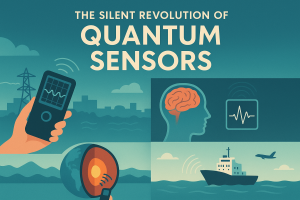
The Silent Revolution of Quantum Sensors

The Silent Revolution of Quantum Sensors

The world is entering a new age of measurement where some of the smallest particles in existence are becoming our most powerful tools. Quantum sensors are moving from research labs into real world industries and the shift promises to reshape the way society monitors the environment, manages resources, and discovers new scientific insights.

Quantum sensors use the strange behavior of atoms and electrons to detect tiny changes in gravity, magnetic fields, and time. These changes were once far too subtle for traditional instruments to register. Now they can be captured with remarkable precision. This opens the door to breakthroughs that can influence fields from medical imaging to geological exploration.

Imagine a handheld device that can map underground structures without drilling a single hole. Quantum gravity sensors are beginning to make this possible by detecting minute differences in the pull of Earths mass below the surface. Companies in construction, mining, and energy exploration are already testing early models because the potential savings and safety improvements are enormous.

Medical research is also paying close attention. Quantum sensors that respond to extremely small magnetic fields may lead to a new generation of heart and brain imaging. These devices could capture electrical activity inside the body with clarity far beyond what current machines can achieve. Early detection of neurological disorders could become far more accurate which is a goal shared by doctors around the world.

Even navigation could be transformed. Ships and aircraft traditionally rely on satellite systems that can be disrupted by storms or interference. Quantum sensors can track movement through measurements of time and motion alone which creates a path toward navigation systems that do not depend on external signals.

The progress is rapid but challenges remain. Many systems still require cold temperatures or delicate equipment. Engineers and physicists continue to work on versions that can operate in harsh environments or fit into compact casings suitable for field use. As these hurdles fall the impact will grow.

Quantum sensing represents a quiet revolution. It advances through precision rather than power and through deeper observation rather than bigger machines. As these instruments spread into industry and research they will reveal details about our world that we were never able to measure before.

The next decade may be one of discovery built not on guesswork but on extraordinary clarity. In science and business the ability to observe more clearly is often the key to progress and quantum sensors are poised to provide that clarity in remarkable ways.